
The World Cup 2026 – A musical celebration
Conducted by Susanna Wilson
Programme Notes (July 2026)

Susanna says “My main reason for choosing the theme was that sport, like music, brings people together and gives a great deal of joy to those who participate and those who go along to watch and listen. In these turbulent times, it’s so heartening to see this coming together and the joy which it brings.
In letters of the time, Thomas Jefferson names music as the “favourite passion of my soul” and says that it “furnishes a delightful recreation for the hours of respite from the cares of the day and lasts us through life”.
These additional notes are provided for you to give more information than we could fit on an A4 programme. We do ask you to make sure your phones are on ‘silent’ or ‘do not disturb’ during our concert so as not to disturb the players or fellow audience members.
Thank you.
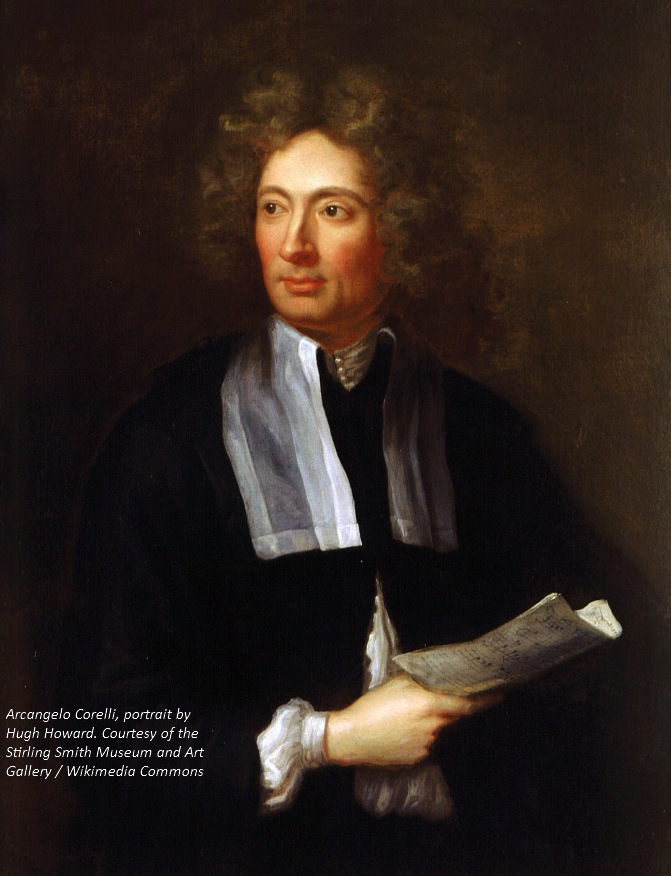
Concerto Op.6 No.10: A. Corelli, transcribed by P. Martin
Praeludio - Allemanda - Adagio - Corrente - Allegro - Minuetto
The series of concerti grossi, Op. 6 feature a ‘concertino’ group of solo players with a ‘ripieno’ ensemble who accompany (usually with continuo) and were considered ground-breaking, leading to several other composers (Handel for example) following this style.
Thomas Jefferson (1743-1826), the 3rd President of the United States of America, was a very keen violinist. During his lifetime he amassed a large catalogue of music including works by Corelli, Vivaldi, Handel and Paganini, and so was likely to have played this concerto grosso. The connection with the USA continues through the Handel and Haydn Society in Boston, founded in 1815 and the oldest continuously performing arts organisation in the United States. From its earliest decades, the Society has been dedicated to presenting both “ancient” and “modern”, playing a central role in shaping American concert life, including the early dissemination of Baroque repertoire.
Corelli’s concerti grossi and trio sonatas were among the foundational works through which American audiences first encountered the Baroque repertoire at a time when this was far from standard in American concert halls. Corelli’s Concerti Grossi, Op. 6 have been part of that story from the beginning and more recently, as H+H embraced period instruments and historically informed practice, these concerti assumed renewed prominence. The ensemble’s performances highlight the qualities that made Corelli’s music so influential: the elegant interplay between concertino and ripieno, the clarity of his harmonic architecture, and the expressive power of his slow movements, which eighteenth‑century listeners regarded as models of lyrical perfection.
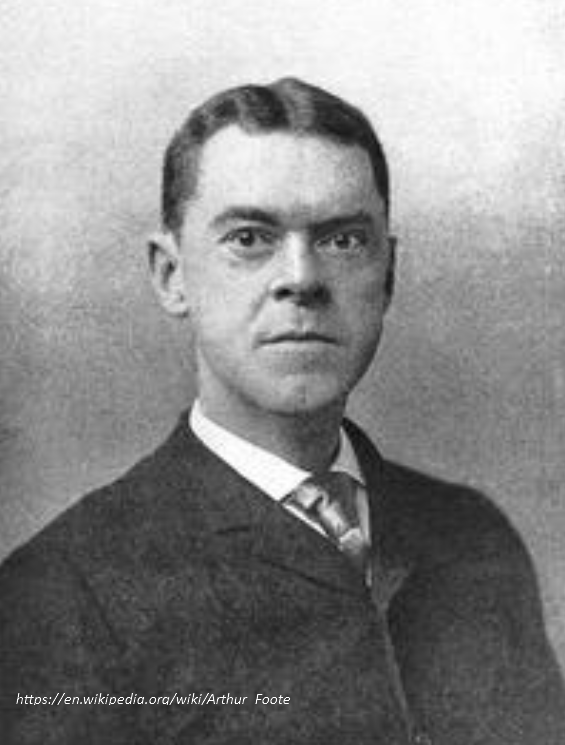
Serenade in E (op.25): Air and Gavotte (1891): Arthur Foote
ii) Air v) Gavotte
With the opening of the Boston Academy of Music in 1867, Boston emerged as a musical centre, with a group of composers based there becoming known as the New England Classicists, or “The Boston Six”. Described as “Romantic” and “European”, these composers took their inspiration from the music of composers such as Mendelssohn and Brahms and championed German 19th-century Romanticism They are credited with developing an American classical idiom which stands apart from its European ancestors.
Arthur Foote graduated from Harvard University in 1875, the first recipient of a Master of Arts degree in music awarded by an American university. His Serenade in E (op.25) consists of five movements each with a title inspired by the baroque. We will play movements 2 and 5. The second movement, Air, is in G Major and is clearly modelled on Bach's Air on the G string. The finale is an upbeat, dance-like Gavotte.
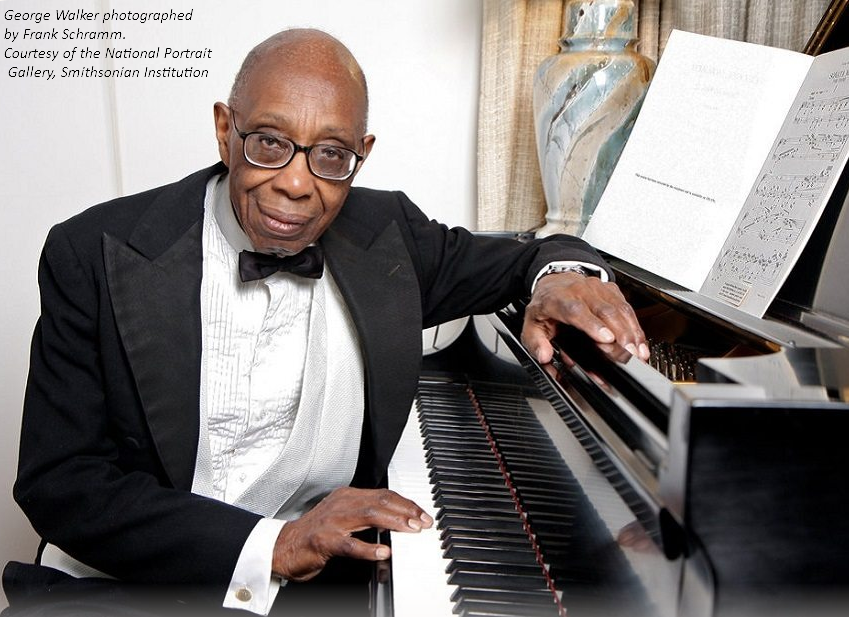
Lyric for Strings (2nd movement from String Quartet No. 1) (1946): George Walker
When George Walker won the Pulitzer prize for composition in 1996, he became the first African American to receive the award. Having studied at the Oberlin Conservatoire, he went on to have a distinguished career as composer, university academic and international concert pianist.
Lyric for Strings is one of the most eloquent and widely performed works by an American composer of the 20th century. Originally composed as the slow movement of his String Quartet No. 1, the piece was later arranged for string orchestra and has since become his most frequently programmed composition. Written when he was just 24, Lyric for Strings already displays the expressive clarity and structural refinement that would characterise his long and distinguished career.
The work is an elegy, composed in memory of his grandmother, who had died shortly before he began the quartet. Its musical language blends a lyrical, almost vocal melodic line with a harmonic palette that reflects both late‑Romantic expressivity and the emerging American modernist idiom. The piece unfolds in a single arching span: a quiet, sustained opening grows into an impassioned central climax before subsiding into a restrained, contemplative close. Throughout, Walker’s writing for strings is notable for its warmth, transparency, and finely judged textural detail.
Although often compared to Barber’s Adagio for Strings for its emotional intensity and elegiac tone, Lyric for Strings possesses a distinct voice — intimate rather than monumental, and shaped by Walker’s characteristic balance of lyricism and structural discipline. Its enduring popularity reflects not only its immediate expressive appeal but also its significance within the broader narrative of American concert music, where Walker’s work has come to occupy an increasingly recognised and influential place.
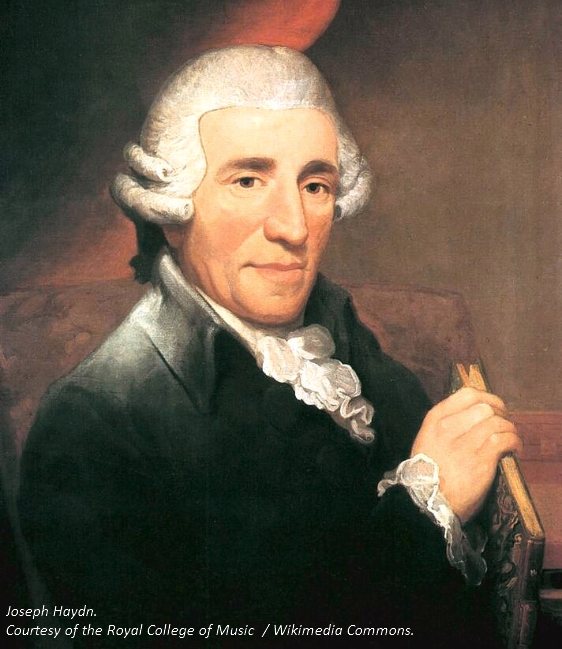
String Quartet in G major, Op. 77 No. 1: (I. Allegro moderato): Joseph Haydn
Another work with a connection to the “Handel and Haydn Society” in Boston, the two quartets of Haydn’s Op. 77 were published in 1802 and were to be his last. The first movement of this String Quartet in G major, Op. 77 No. 1, represents the composer at the height of his late style. Written in 1799 for Prince Lobkowitz — the same patron who would soon commission Beethoven’s Op. 18 quartets — this work belongs to Haydn’s final, incomplete set of quartets and demonstrates the extraordinary refinement of form, wit, and motivic economy that he had developed over four decades.
The Allegro moderato opens with a poised, gracefully contoured theme whose simplicity belies its structural sophistication. Haydn immediately subjects this material to subtle motivic play: fragments are passed between instruments, inverted, compressed, and rhythmically displaced. The movement’s sonata form is articulated with exceptional clarity, yet Haydn continually enlivens it through unexpected harmonic turns, deft textural contrasts, and a characteristic interplay between elegance and humour.
A hallmark of the movement is its conversational texture. Rather than presenting a dominant first violin with accompaniment, Haydn distributes thematic material democratically across the ensemble. The result is a lively musical dialogue in which each instrument contributes to the unfolding argument — a model that would profoundly influence Beethoven’s early quartets.
The development section is compact but remarkably inventive, exploring remote tonal regions and intensifying the motivic tension before the recapitulation restores the opening material with renewed brightness. Throughout, Haydn’s writing balances Classical restraint with a forward‑looking harmonic and rhythmic vitality that anticipates the emerging Romantic sensibility.
As the opening movement of his penultimate quartet, this Allegro moderato stands as a testament to Haydn’s mastery of the genre he helped to define: lucid in design, rich in detail, and animated by a spirit of playful sophistication.
A retiring collection will be evenly divided between the orchestra and the Barons Court Project, the local day centre day centre who support people that are on low income, homeless, or vulnerable to mental health issues
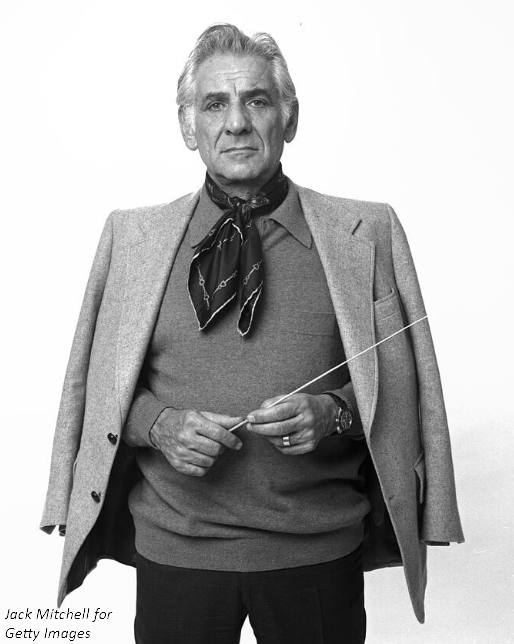
West Side Story - a medley: Leonard Bernstein, arranged by John Moss
Features Maria, One Hand, One Heart, Cool and Somewhere
Conductor, composer, pianist, music educator, author, and humanitarian, Bernstein was considered to be one of the most important conductors of his time, and was one of the first American-born conductors to receive international acclaim
As a composer, Bernstein wrote in many styles, with West Side Story arguably becoming his most famous work. Conceived by Jerome Robbins with music by Bernstein and lyrics by Stephen Sondheim, West Side Story is a musical based on a book by Arthur Laurents. Inspired by Shakespeare's play Romeo and Juliet, the story is set in the mid-1950s on the Upper West Side of Manhattan in New York City. The musical explores the rivalry between two teenage street gangs - The Sharks, who are recent migrants from Puerto Rico, and the Jets, who are white. The young protagonist Tony, of Polish and Irish descent and a former member of the Jets, falls in love with Maria, the sister of the leader of the Sharks. The dark theme, sophisticated music, extended dance scenes, tragic love story, and focus on social problems marked a turning point in musical theatre.
The original 1957 Broadway production ran for 732 performances and was nominated for six Tony Awards.
“This will be our reply to violence: to make music more intensely, more beautifully, more devotedly, than ever before” (Bernstein after hearing of the assassination of JF Kennedy)
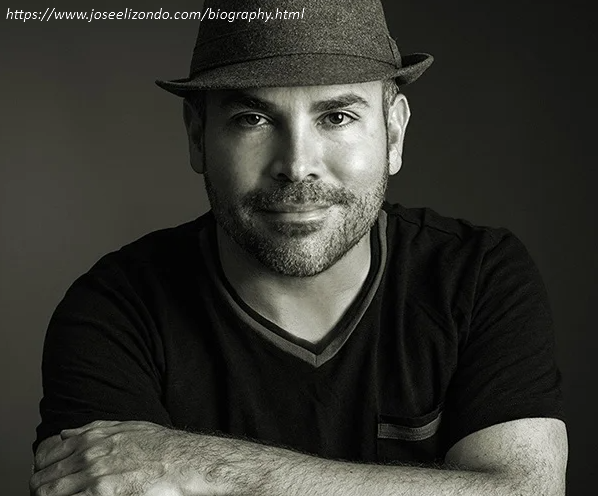
Estampas Mexicanas: José Elizondo
Describing the inspiration for this work, Elizondo refers to the inclusion of Mexican Folk elements, and to the rhythmic vitality of the music of the Mexican composer Carlos Chávez. The beginning of the movement paraphrases the opening bars of Sinfonia India by Chávez but uses the material in a lighter manner to create a festive parade of colourful folk like tunes and rhythms.
His first composition for orchestra, Estampas Mexicanas was originally written as an assignment for a university class and premiered at an outdoor concert in San Jose in California. The orchestra was conducted by Leonid Grin, a personal friend and collaborator of Leonard Bernstein. Estampas Mexicanas has since been performed at over 300 concerts by orchestras in Europe, Asia, Africa, Australia, and the Americas.
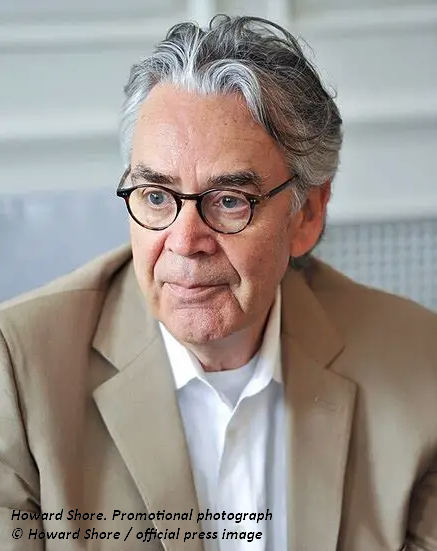
“The Lord of the Rings: In Dreams”. Howard Shore, arranged by George Korynta
The Canadian composer Howard Shore has earned an international reputation as a composer of over 80 film scores. His score for The Lord of the Rings: The Fellowship of the Ring (2001) has become one of the most celebrated achievements in modern film music, distinguished by its rich thematic architecture and its ability to evoke the cultural, emotional, and geographical breadth of Tolkien’s world. He makes use of over 50 leitmotifs (musical themes) to represent different characters and places. In Dreams appears at the close of the film as a vocal epilogue to the Shire theme, encapsulating the innocence, nostalgia, and quiet resilience associated with the hobbits.
The melody, derived from his principal Shire motif, is a gentle, pentatonic‑inflected tune first introduced on solo whistle and strings. In In Dreams, this material is expanded into a lyrical song that reflects on fellowship, loss, and the promise of return. Its simplicity is deliberate: Shore uses diatonic harmony, warm string textures, and a vocal line shaped like a folk lullaby to evoke the pastoral world of the Shire in contrast to the darker musical landscapes elsewhere in the score.
George Korynta’s arrangement for ensemble preserves the expressive clarity of Shore’s original while adapting it for concert performance. The orchestration highlights the tenderness of the melody, allowing the harmonic undercurrents and motivic connections to the broader Lord of the Rings musical tapestry to emerge with new transparency. In this form, In Dreams functions not only as a standalone lyrical piece but also as a distilled expression of the emotional core of Shore’s monumental trilogy.
Howard Shore’s Website is here
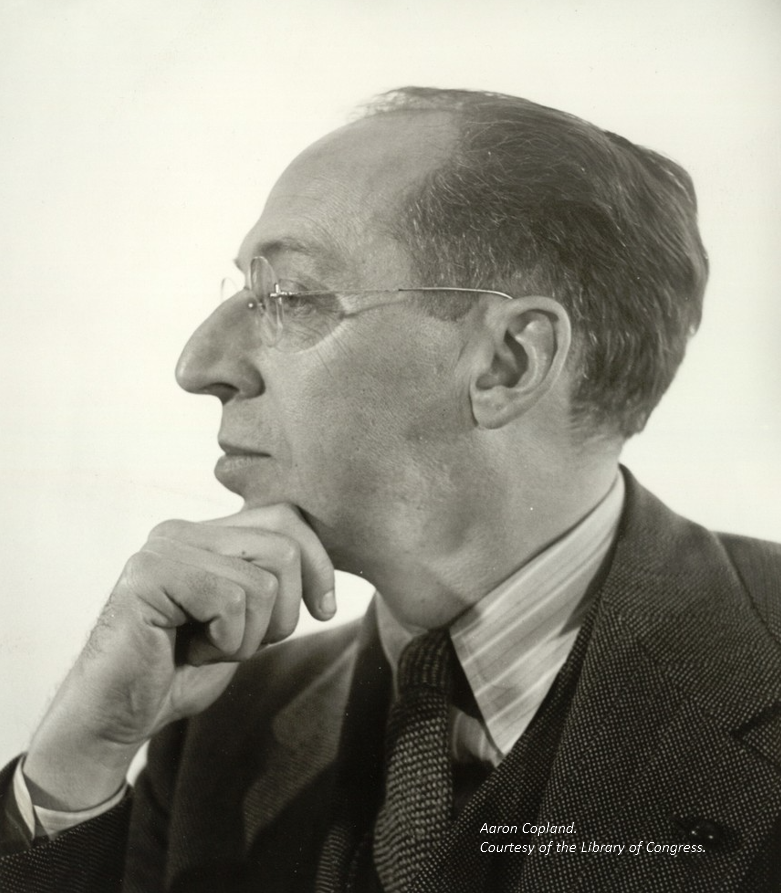
Hoe‑Down from Rodeo (1942): Aaron Copland
Aaron Copland is best known for the works he wrote during the 1930s and 40s which were in a deliberately accessible style, often incorporating traditional American folk tunes into the music. Hoe‑Down is the lively finale of his 1942 ballet Rodeo, featuring two American square dance tunes, especially the fiddle tune “Bonaparte’s Retreat.” Rather than just quote the melody, he subjects it to a process of rhythmic transformation, fragmentation, and orchestral expansion. The result is a stylised evocation of American folk practice rather than a literal reproduction of it. Additional folk sources, including “Miss McLeod’s Reel,” appear in secondary thematic material, reinforcing the movement’s grounding in vernacular dance.
A hoe-down is a dance competition that is often described as noisy and riotous. The music is full of vigour and energy as the cowgirls and boys pair off. This is music about real people and their folk tunes and customs; it's full of open plains, a sense of adventure and the American pioneering spirit. With driving rhythms, it takes us to the exciting, dramatic world of cowboys, cowgirls and evokes the energy of a barn dance and the spirit of the American West.
The work occupies a pivotal place in Copland’s so‑called “vernacular” or “populist” period, during which he sought to create an accessible, distinctly American musical language through the integration of folk materials, open harmonies, and sharply profiled rhythmic writing. Rodeo exemplifies this aesthetic, combining modernist clarity with idioms drawn from rural dance traditions and cowboy folklore.
We wish to express our thanks to Chimes Music (Kensington) for their help

Images:
George Walker (1922 – 2018), composer and pianist, photographed by Frank Schramm (2010). Courtesy of the National Portrait Gallery, Smithsonian Institution
Aaron Copland (1900 – 1990), photographed by Victor Kraft (c. 1945). Courtesy of the Library of Congress.
Joseph Haydn (1732 – 1809), portrait by Thomas Hardy (1791). Courtesy of the Royal College of Music Museum / Wikimedia Commons.
Arcangelo Corelli (1653–1713), portrait by Hugh Howard (1697). Courtesy of the Stirling Smith Museum and Art Gallery / Wikimedia Commons
https://en.wikipedia.org/wiki/File:Leonard_Bernstein_by_Jack_Mitchell_(high_quality).jpg
.jpg)
https://www.bach-cantatas.com/Lib/Foote-Arthur.htm,
https://ichef.bbci.co.uk/images/ic/1200x675/p07xgrl3.jpg

https://filmmusictheory.com/article/howard-shore-the-maestro-of-cinematic-soundscapes/
https://www.joseelizondo.com/biography.html