
Our winter concert will be on Sunday 6th December 2026 at 16:00
Venue: St Albans Fulham, 2 Margravine Road, LONDON W6 8HJ
Nearest stations: Barons Court* or Hammersmith
Buses are available on Fulham Palace Road and Lillie Road
Parking is in Zone H of Hammersmith/Fulham. Please check for the latest update on restrictions
*Barons Court station is currently closed for westbound trains. Please check with TfL for the latest updates
Some Information on the music we are currently studying
Sir Grenville Bantock: Scenes from the Scottish Highlands (1913)
Scenes from the Scottish Highlands is an evocative work by the English composer Sir Granville Bantock, whose music frequently drew inspiration from Celtic legend, Scottish landscapes, folklore and the natural world. Bantock was one of the most imaginative British composers of the generation immediately preceding Vaughan Williams and Holst whose musical language combines the rich orchestral colours of late Romanticism with an interest in folk melody and musical storytelling.
The suite is written for string orchestra and consists of five contrasting movements, each based on an existing Scottish traditional melody. We will play two of these:
1. Strathspey – The Braes o' Tullymet. A strathspey is a Scottish dance characterised by its distinctive dotted rhythms and sharply accented Scotch snaps. The opening establishes an unmistakably Scottish character.
3. Quickstep – Inverness Gathering. A spirited march-like movement, suggesting the energy of a Highland gathering, with buoyant rhythms and a strong sense of forward motion.
Unlike some of Bantock's more ambitious orchestral works, this suite is deliberately modest in scale with a the combination of authentic traditional melodies and sophisticated Edwardian string writing but avoids turning the music into a grandiose symphonic statement: the tunes remain clearly recognisable, while changes of texture, harmony and instrumental colour bring them to life. The suite received its first performance on 18 November 1913, at a Sheffield Promenade Concert in the city's Albert Hall, conducted by Bantock himself; it was warmly received.
Francesco Barsanti: Overture in A minor (op.4 no.1)
The first piece in his set of 9 Overtures, Op. 4 (published around 1745 in Edinburgh).
Francesco Barsanti (1690–1772), was an Italian Baroque flautist, oboist and composer, born in Lucca (Tuscany). He originally studied law but turned to music, becoming a skilled wind instrumentalist. He played oboe and recorder, and soon after arriving in London in 1714 obtained a post in the opera orchestra at the Haymarket where Handel's operas were being produced. In 1735, Barsanti left London for Edinburgh in Scotland, where he obtained a post as a 'Master' with the Edinburgh Musical Society. He stayed in Scotland for eight years, during which time he benefitted from the support of the young Lady Erskine (Charlotte Hope).
His music combines the Italian musical tradition of Corelli and the late Baroque with a fascination for Scottish traditional melodies.
Barsanti's Edinburgh years, approximately 1735–1743, coincided with the development of the intellectual and cultural world that would become associated with the Scottish Enlightenment. He worked for the Edinburgh Musical Society, which brought together professional musicians and enthusiastic amateurs. His duties included teaching, copying music and maintaining instruments, as well as contributing to musical performances. Barsanti illustrates how cosmopolitan Edinburgh had become: Italian musicians were contributing directly to Scottish musical culture, while absorbing influences from their adopted country
The Allegro movement of this overture incorporates a popular English country dance tune of the day called "Richmond Ball, or, Mr Lane’s Maggott".
Sir Peter Maxwell Davies (1934–2016) "Farewell to Stromness"
Written in 1980, it is a short piano piece, usually lasting around four to five minutes, whose gentle, flowing melody evokes the landscape and atmosphere of the Orkney Islands, where Maxwell Davies made his home. What makes the piece particularly interesting is that, despite its serene character, it originated as a musical protest against plans in the late 1970s to mine uranium in Orkney, provoking considerable opposition among islanders, who feared the environmental consequences.
Maxwell Davies was among the opponents and in 1980, he composed a musical revue entitled The Yellow Cake Revue (the title refers to yellowcake, a concentrated form of uranium produced during the processing). The revue combined satire, political protest and music, drawing attention to the potential consequences of uranium mining for the islands and Farewell to Stromness was one of its instrumental interludes.
The title imagines the loss of Stromness, Orkney's historic harbour town, and expresses something of the sadness of saying goodbye to a cherished place, yet the music is not overtly angry or dramatic. Instead, it conveys affection, nostalgia and a sense of quiet resignation. The proposed uranium development did not go ahead, and the piece has subsequently become a much-loved musical emblem of Orkney.
Frederick Chopin: Prelude
In 1848, Frédéric Chopin made his only visit to Scotland, during what proved to be the final year of his career as a performing pianist. Following the breakdown of his relationship with the novelist George Sand in 1847, Chopin travelled to Britain in April 1848. It was a remarkable but rather unhappy journey and Chopin was already seriously ill, emotionally exhausted and increasingly unable to sustain the demands of public performance.
One of the principal figures behind the visit was Jane Stirling (1804–1859), a wealthy Scottish amateur pianist who had been his pupil in Paris and was devoted to his music. Stirling and her sister Katherine Erskine helped organise his concerts, provided financial assistance and introduced him to Scottish aristocratic society.
During the summer and autumn of 1848, Chopin stayed at several country houses, including Calder House in Midlothian and Johnstone Castle in Renfrewshire. His Scottish engagements included performances in Edinburgh and Glasgow, as well as private musical gatherings.
The tour was physically punishing. Travelling (by horse-drawn carriage) between country houses, attending social occasions and performing for hosts and guests placed enormous demands on someone whose health was already failing. Chopin left Scotland at the end of October 1848, giving his final public performance in London on 16 November, before returning to Paris where he died on 17 October 1849, aged just 39.
“Loch Lomond”, also known as “The Bonnie Banks o’ Loch Lomond”, is one of Scotland's best-loved traditional songs. Its haunting melody and apparently romantic words conceal a much sadder story, traditionally associated with the Jacobite rebellions and the aftermath of the Battle of Culloden in 1746.
Following the defeat of Bonnie Prince Charlie's Jacobite army, many prisoners were transported south to England. Some were executed, while others were imprisoned or eventually released.
According to the traditional story, the song concerns two Jacobite soldiers, one condemned to death and the other destined to return home.
The high road is the ordinary earthly route home, taken by the surviving soldier.
The low road is the route taken by the spirit of the executed soldier, who will reach Scotland before his living companion.
“I'll be in Scotland afore ye” therefore refers to the dead man's soul returning home before his friend can complete the journey.
This interpretation is sometimes linked to Scottish folklore about spirits travelling by hidden or supernatural routes. The song is now frequently sung at weddings, gatherings, concerts and sporting occasions, sometimes by thousands of people simultaneously.
Auld Lang Syne: Traditional Scottish song – words by Robert Burns (1759–1796)
Few songs are as universally recognised as Auld Lang Syne, traditionally sung at the stroke of midnight on New Year’s Eve. Its title, in Scots, means roughly “for old times’ sake”, and its words celebrate friendship, shared memories and the enduring bonds between people.
The Scottish poet Robert Burns sent the words to the Scots Musical Museum in 1788, describing them as an old song which he had collected from oral tradition. Although Burns helped preserve and popularise the verses, the familiar melody became associated with them only later, appearing in print in 1799.
Originally a song of remembrance rather than specifically a New Year celebration, Auld Lang Syne has become an international symbol of fellowship and farewell. Its simple, heartfelt melody carries a message that transcends language and nationality: old friendships should never be forgotten.
Thomas Alexander Erskine, 6th Earl of Kellie (1732–1781): Quartet in C minor (ed. David Johnson)
Thomas Alexander Erskine was one of the most intriguing figures in eighteenth-century Scottish music. An aristocrat, violinist and composer, he was celebrated in his lifetime for his musical ability but subsequently fell into relative obscurity. Unlike most Scottish aristocrats of his time, who regarded music principally as a social accomplishment, Kellie was a serious composer and performer and he stands at the meeting point of three musical traditions: the Scottish fiddle tradition, Italian Baroque music and the emerging Classical style associated with Haydn and Mozart.
Around 1752–53, he travelled to Mannheim, then one of Europe's most important centres of orchestral innovation, where he studied with Johann Stamitz (1717–1757).
Stamitz and the Mannheim orchestra pioneered orchestral techniques that helped establish the Classical symphony:
Dramatic crescendos involving the entire orchestra.
Powerful contrasts between loud and soft passages.
Energetic string writing and brilliant ascending figures.
Greater independence and prominence for wind instruments.
A more dynamic approach to orchestral texture than was usual in the Baroque period.
When Kellie returned to Scotland in 1756, he brought these techniques with him. He became one of the earliest significant British exponents of the Mannheim style. His orchestral writing has a recognisably early-Classical character, with energetic fast movements, strong rhythmic drive and contrasting orchestral effects.
Kellie was known as “Fiddler Tam”, a nickname that reflected his enthusiasm for the violin. He was closely associated with the Edinburgh Musical Society, which organised concerts at St Cecilia's Hall. He directed concerts, performed as a violinist and introduced Scottish audiences to orchestral techniques that were relatively new in Britain.
He was also famous for his sociability, drinking and extravagant lifestyle. Financial difficulties eventually forced him to sell most of his family estates. He never married and died in Brussels on 9 October 1781, aged 49.
Many of his compositions were lost or remained in manuscript and his aristocratic position meant he had little financial incentive to publish or promote his music. The String Quartet in C minor, dating from approximately 1770 belongs to a period when the distinction between chamber music and orchestral music was much less firmly established than it became with Haydn and Mozart.
The three-movement fast–slow–fast structure is characteristic of the early Classical symphony and Italian overture, rather than the four-movement string quartet that later became standard; his music reflects the orchestral innovations associated with the Mannheim school.
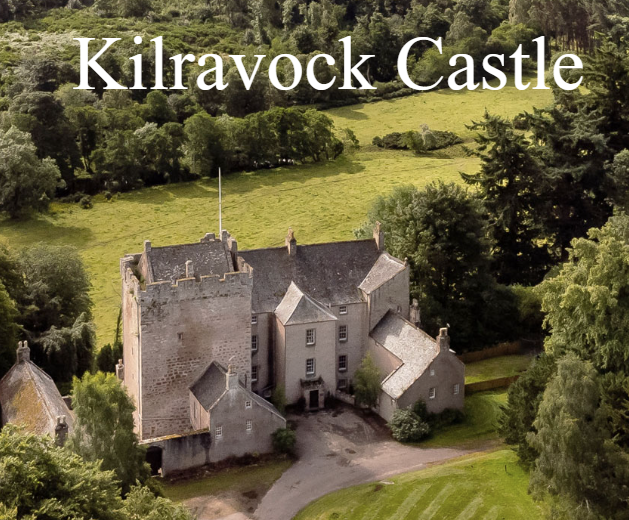
Until the 1970s only a small number of his compositions was thought to survive, though the discovery in 1989 of two manuscripts containing chamber works at Kilravock Castle (near Inverness) has doubled the number of his surviving compositions – notably with nine trio sonatas and nine string quartets. This quartet survived in manuscript parts among a collection of previously neglected eighteenth-century Scottish chamber music rediscovered in 1989.
David Johnson prepared this performing edition. Johnson was a Scottish composer, cellist and musicologist whose Cambridge doctoral research focused on the Earl of Kellie and who researched, catalogued and edited Kellie's chamber music.
Felix Mendelssohn: The Hebrides Overture (arr. Jeff Manookian)
In the summer of 1829, the 20-year-old Felix Mendelssohn-Bartholdy made a three-week visit to Scotland that would inspire two of his best-loved works: The Hebrides Overture, sometimes known as Fingal’s Cave, and the Symphony No. 3 in A minor (Scottish). Rather than send their son to the more conventional destinations of France and Italy, Mendelssohn’s parents had encouraged him to begin his travels in England before continuing north to Scotland. As admirers of the writings of Sir Walter Scott, they regarded Scotland as a particularly appealing destination and even hoped that Felix might have the opportunity to meet the celebrated novelist.
On 7 August, Mendelssohn travelled by steamer from Fort William to Oban, continuing from there to Tobermory on the Isle of Mull. The following day, he embarked on an excursion to the uninhabited island of Staffa and its remarkable Fingal’s Cave, whose towering basalt columns and extraordinary natural acoustics have fascinated visitors for centuries.
The Hebrides belongs to the Romantic tradition of the self-contained concert overture: a work intended for performance in its own right, rather than as an introduction to an opera or a prelude to incidental music. It is often described as a tone poem, evoking the atmosphere and character of its subject. It is difficult to resist hearing the overture as a musical representation of the sights and sounds Mendelssohn encountered in the Hebrides. The gentle, oscillating semiquaver figures that grow out of the opening theme evoke the ceaseless movement of the water, while rising surges in the cellos and basses suggest the swell of the sea, with waves pushing against the boat or breaking upon the shore. In the development section, these same restless figures underpin bleak, declamatory exchanges across the orchestra, conjuring a sense of the vastness of the landscape and seascape. The music is punctuated by sounds suggestive of the cries of seabirds, appearing unexpectedly from different parts of the orchestra, as though carried on the wind. Towards the end of the development, the music gathers into a storm of considerable intensity, recalling the turbulent conditions Mendelssohn experienced on his voyage to Staffa.
Anyone who has travelled among the Hebrides will recognise these sudden changes of weather and mood: fierce wind and driving rain giving way, sometimes within minutes, to an almost miraculous calm, before the elements gather strength once more. Mendelssohn captures something of this extraordinary landscape with remarkable vividness, yet without sacrificing the coherence and elegance of the music itself.
The Hebrides Overture received its first performance in London in 1832, conducted by Thomas Attwood, a former pupil of Mozart.
See https://www.mendelssohninscotland.com for further information